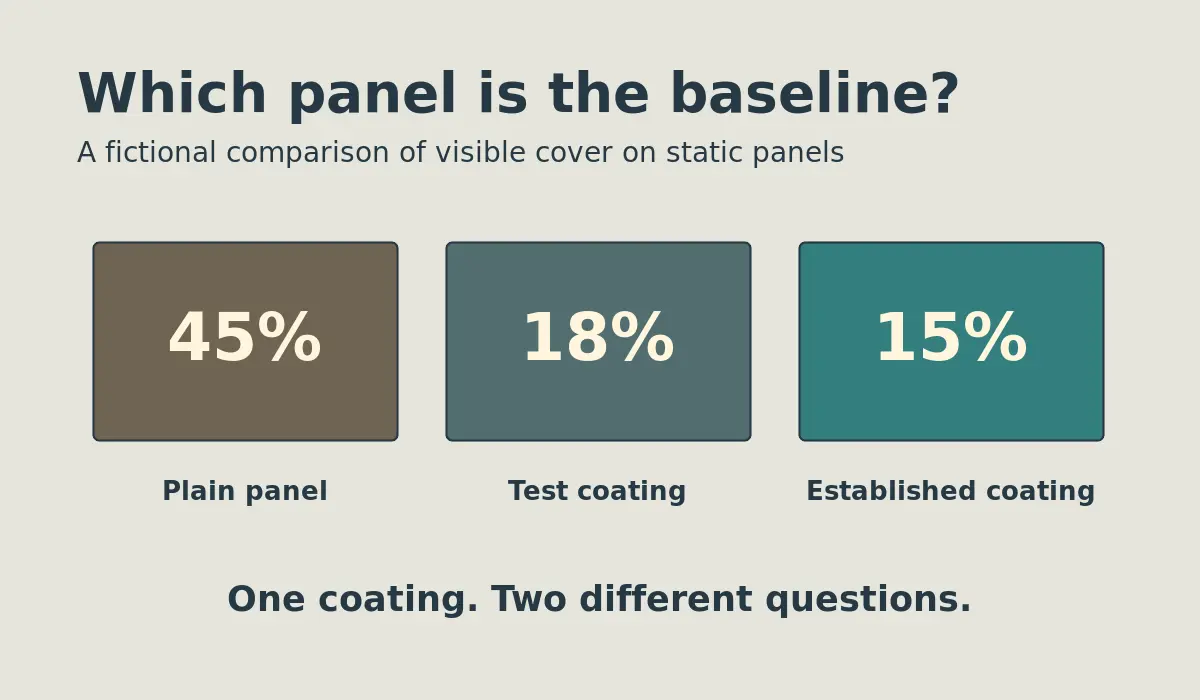
A coating panel comes out of an exposure and looks comparatively clean. The next question is which panel made it look that way. An untreated or non-antifouling surface can indicate how much growth the test site supported. An established coating can provide a different comparison, closer to the choice between two coatings meant to serve the same purpose.
The FOUL-X-SPEL final summary lists several kinds of reference. In its account of static exposure inspections, the project describes a polyurethane reference that served as a negative control for polyurethane formulations. It also describes acrylic and silicone reference paints in the same discussion. Figure 4 shows a particular silicone reference, code X3, next to the experimental silicone coating at the NOC raft in Southampton. The reference code, location and observation dates belong with that figure. FOUL-X-SPEL final summary, panel exposure and Figure 4.
Keep the result and change the question
In a fictional static exposure, the plain panel has 45% visible cover under a common scoring rule. The new coating has 18% and the established coating has 15%. The new coating is 27 percentage points below the plain panel. Against the established option it has three points more cover. The new panel’s score stays at 18% throughout. Its usefulness to a decision depends on the reference used and, for a small gap, how repeatable the scoring is across panels.
What a reference code can hide
Suppose a second report calls its comparator simply “reference” and gives the result as a change from that panel. Before putting the two reports on the same line, check what each panel was meant to represent and whether it shared the exposure site, interval and scoring rule. The historical project also used a sanded and polished reference plate in an as-applied towing experiment. That plate belongs to a resistance comparison, and a reference label on it answers a different question from the exposure control.
Copy the comparator’s name into the result sentence. “Less visible cover than the plain control at the recorded exposure date” keeps a specific piece of evidence intact when a photograph or table later travels without the rest of the report.